
AML Compliance
10 Best AML Software in Nigeria (2026 Comparison)
A practical comparison of 10 AML software platforms, looking at how well they support regulatory requirements, identity verification, transaction monitoring, screening, case management and audit trails.
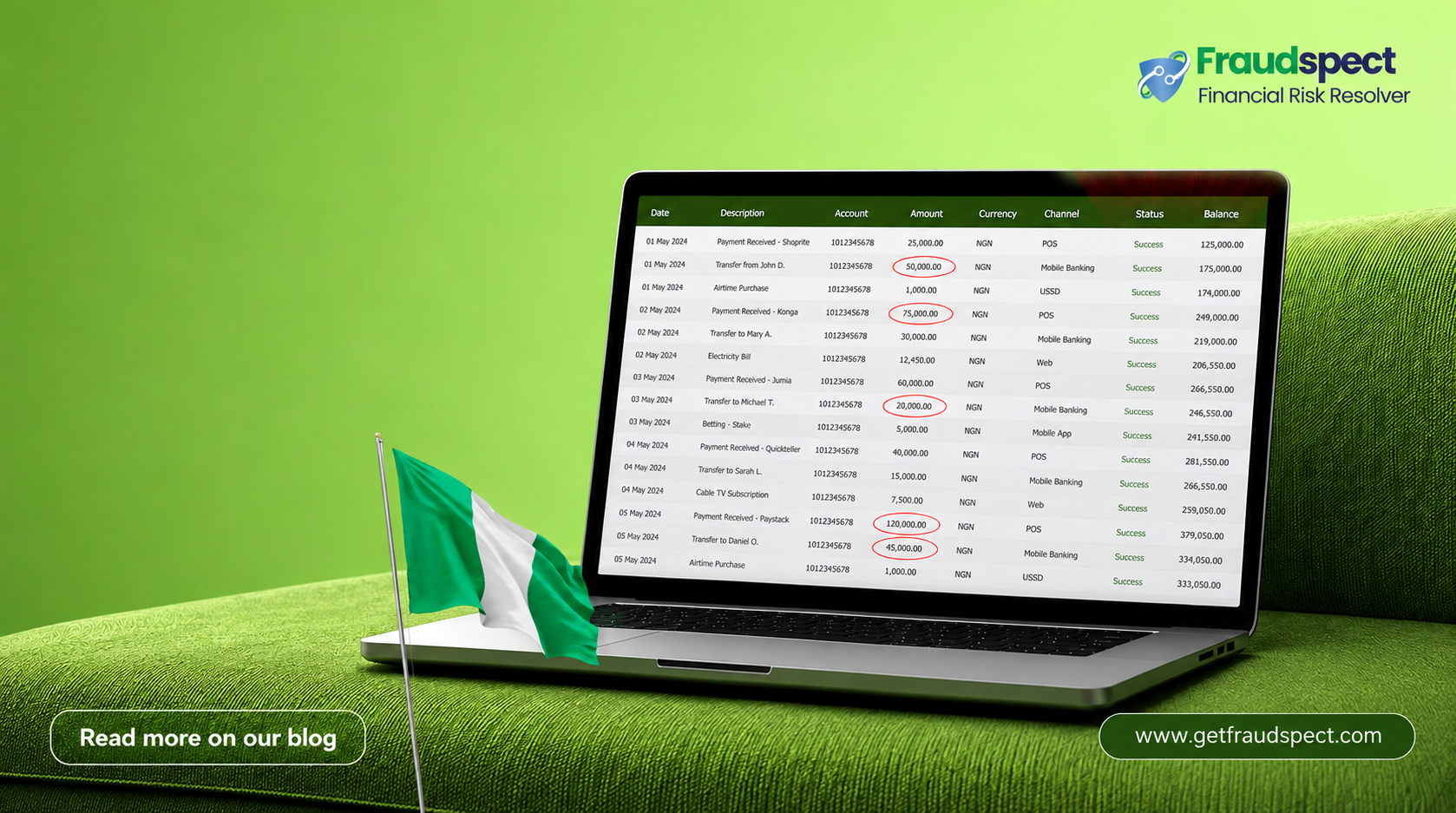
Fraudspect Intelligence · 2026 Edition
If your transaction monitoring still runs on nightly batch files, the CBN's Baseline Standards for Automated AML/CFT/CPF Solutions, issued 10 March 2026 under Circular BSD/DIR/PUB/LAB/019/002, already classify that system as non-compliant. Deposit money banks have 18 months from that date to reach full compliance.
Every other financial institution the CBN regulates has 24 months to reach full compliance. Roadmaps were due to the Compliance Department by 10 June 2026.
That deadline is why you're reading this. You're not browsing for interesting AML technology. You're trying to work out which platform in the Nigerian market can actually pass an examination, survive a naira devaluation on your budget line, and keep running when NIBSS or NIMC verification is temporarily unavailable. Because when a critical verification service goes down, even for a few hours, your team still has customers to verify, transactions to assess, and compliance obligations to meet.
We've built AML and fraud infrastructure for Nigerian banks, fintechs, and telcos long enough to know that most comparison articles on this topic are written by people who have never sat across from a CBN examiner.
This one is written by people who have. By the end, you'll know what separates the ten platforms genuinely built for Nigeria's regulatory reality from those that bolt a Nigeria page onto a system designed for FinCEN and the FCA, and you'll have a shortlist of questions to put to any vendor before you sign.
What "Best" Actually Means for a Nigerian Compliance Team
Global AML rankings measure the wrong things for this market. A platform that scores well on FATF-standard sanctions coverage but can't validate a BVN in real time, or that prices in dollars with no allowance for a currency that moved from ₦460 to ₦1,500 to the dollar inside three years, isn't the best option here. It may not be usable.
Three criteria decide whether an AML platform survives contact with a Nigerian institution.
Regulatory fit
Does it screen against the CBN Domestic Watchlist and the NFIU's internally designated persons list, not just OFAC and the UN Consolidated List? The Baseline Standards require, at minimum, screening against OFAC's SDN list, the UN Security Council Consolidated List, the EU Consolidated Financial Sanctions List, the UK's HMT list, the CBN Domestic Watchlist, the NFIU list, and tiered PEP databases. A platform missing the domestic lists fails on day one, no matter how good its machine learning is.
Identity infrastructure integration
Can it validate a BVN against NIBSS and a NIN against NIMC in real time, at onboarding and on every subsequent transaction? Self-declared identity no longer satisfies any KYC tier under the current framework.
Operational reality
Can a three-person compliance team actually run it? Most Nigerian compliance functions are understaffed relative to what a twelve-person team at a European bank would consider baseline. A platform that assumes dedicated data science support to tune its rules is not built for this market, whatever its marketing says.
We scored the ten platforms below against those three criteria, plus pricing transparency in naira, case management depth, and evidence of live deployment inside Nigerian institutions rather than a regional office with no local clients.
The 10 Best AML Software Platforms in Nigeria for 2026
| Platform | Best For | Local Watchlist Coverage | Real-Time BVN/NIN | Pricing Model |
|---|---|---|---|---|
| Fraudspect | Unified monitoring, screening, and onboarding on one platform | CBN Domestic Watchlist, NFIU list, global sanctions | Yes | Usage-based, naira billing available |
| Youverify | Identity-heavy KYC with AML add-ons | Yes | Yes | Tiered subscription |
| Smile ID | Onboarding and liveness-first flows | Partial, sanctions-focused | Yes | Per-verification |
| Prembly | API-first identity and compliance stack | Yes | Yes | Tiered subscription |
| Dojah | Developer-friendly KYC/AML APIs | Yes | Yes | Per-verification |
| Regfyl | Compliance-workflow-first platform | Yes | Partial | Subscription |
| QoreID | Identity verification with a screening layer | Partial | Yes | Per-verification |
| Seamfix | Enterprise identity management | Partial | Yes | Enterprise licence |
| VerifyMe | Digital identity and background checks | Partial | Yes | Per-verification |
| Sumsub | Global platforms operating in Nigeria | Global lists only, no CBN Domestic Watchlist as standard | No, requires custom integration | USD subscription |
1. Fraudspect
Fraudspect is built around a single problem we kept watching Nigerian compliance teams run into: the tools for onboarding, screening, and transaction monitoring don't talk to each other, so an examiner's question about a flagged customer sends an analyst hunting across three systems for one answer.
The platform runs transaction monitoring, PEP and sanctions screening, AML compliance workflows, ID liveness verification, KYC verification, and adverse media screening on a shared intelligence layer, so a signal from onboarding strengthens detection in monitoring instead of sitting in a separate database that nobody cross-references.
One API, one dashboard, one audit trail, which is exactly what Standard 5.2 of the Baseline Standards is asking for when it requires linkage between KYC, risk profiling, and transaction monitoring rather than disconnected point solutions.
We screen over 1 million transactions across more than 200 countries, at 98.4% detection accuracy and under 200ms average decision time. Those figures come directly from our platform telemetry, not a lab benchmark.
CreditDirect, VDT Communications, CANVI, KomfotHealth, and SR run their onboarding and monitoring on Fraudspect today, across digital lending, telecoms, and healthcare, which are three sectors with genuinely different fraud typologies and identity risks.
Fraudspect is developed by Platview Technologies. CEO Dapo Salami has described the platform's purpose plainly: it exists to trace the true identity behind every transaction, which is the actual job a monitoring system has to do once you strip away the dashboard. Pricing runs on usage, with naira billing available, which matters when your budget was approved at one exchange rate and your renewal lands at another.
Where Fraudspect fits best: institutions that want to stop maintaining three vendor relationships for what is functionally one compliance obligation.
Where it fits less well: an institution with a single, narrow need, like sanctions screening only, with no plan to expand into monitoring, might find a point solution cheaper for that use case alone.
2. Youverify
Youverify built its reputation on identity verification and has extended into AML screening and monitoring. Strong BVN, NIN, and CAC verification coverage, with sanctions and PEP screening layered on top. Works well for institutions whose primary pain is onboarding friction and who need AML as a secondary capability rather than the core product.
3. Smile ID
Smile ID's strength is liveness detection and biometric verification, particularly across facial recognition tuned for a range of skin tones and lighting conditions common on African mobile devices. AML and sanctions screening exist but sit downstream of the identity layer rather than as an equally developed monitoring capability. A reasonable fit for high-volume, low-friction onboarding where the compliance requirement is CDD-heavy rather than transaction-monitoring-heavy.
4. Prembly
Prembly runs an API-first identity and compliance stack covering BVN, NIN, and document verification alongside AML screening. Developer documentation is solid, and integration timelines tend to run faster than those for platforms built around a heavier case management interface. Fits fintech CTOs who want to build compliance into a product flow rather than bolt on a separate compliance dashboard.
5. Dojah
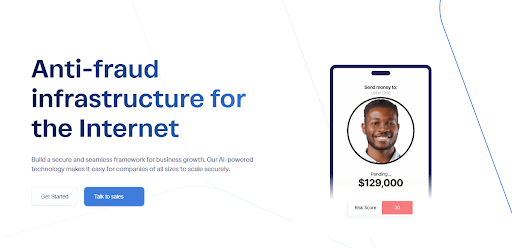
Dojah targets the same developer audience as Prembly, with a lighter footprint and per-verification pricing that suits early-stage fintechs still working out transaction volume. AML screening covers global sanctions lists, with CBN Domestic Watchlist coverage available depending on the plan tier. Worth checking that detail directly against your licence category before assuming it's included by default.
6. Regfyl
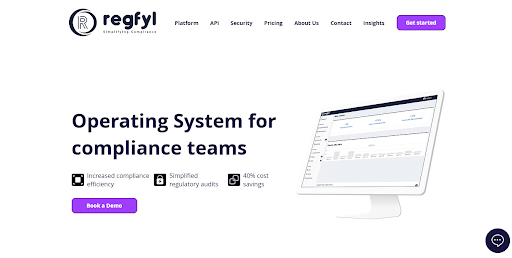
Regfyl positions itself around compliance workflow rather than pure identity verification, with case management, STR drafting support, and monitoring rule libraries aimed specifically at the CBN Baseline Standards. Newer to the market than Youverify or Prembly, but the workflow-first design that is a genuine differentiator for compliance officers whose real bottleneck is evidence documentation, not detection.
7. QoreID
QoreID focuses on identity verification, with sanctions and watchlist screening as an added module. Strong for BVN and NIN validation reliability, thinner on transaction monitoring depth. Better suited to an institution that already owns a monitoring system and needs a dedicated identity layer to plug into it.
8. Seamfix

Seamfix has a longer enterprise history in Nigeria, originally built around field agent identity capture for telecoms and financial inclusion programmes. Its AML capability is real but sits inside a broader identity management suite, which can mean more implementation overhead for a team that only needs the compliance module.
9. VerifyMe

VerifyMe covers digital identity verification and background checks, with AML screening available as an add-on. Pricing is per verification, which suits lower-volume DNFBPs and smaller institutions better than high-transaction-volume banks.
10. Sumsub
Sumsub is a genuinely capable global platform, and its presence on this list matters because it illustrates the gap most global vendors leave open in Nigeria. Sanctions and PEP coverage are comprehensive against international lists. The CBN Domestic Watchlist and NFIU internally designated persons list are not standard inclusions, and BVN or NIN validation requires custom integration work that Nigerian-built platforms ship with by default. Pricing is USD-denominated, which is a live budget risk given naira volatility. A fit for institutions with genuinely global, multi-jurisdiction screening needs where Nigeria is one market among many, less so for an institution where Nigeria is the whole business.
What the CBN Baseline Standards Actually Require From Your Monitoring System
Three things determine whether your monitoring system will pass a CBN examination in the current environment: screening list coverage, evidence trail integrity, and demonstrated tuning.
Screening coverage is the easiest to verify and the most commonly missed. The Baseline Standards set a minimum list of eight source systems that systems must screen against, including the CBN Domestic Watchlist and the NFIU's internally designated persons list, both of which sit outside what most globally built platforms ship with by default.
Batch-only screening no longer satisfies the standard. Screening has to run at onboarding and at every transaction execution.
Evidence trail integrity is where most institutions fail without realising it. Standard 5.9 requires an immutable, tamper-proof audit record with forensic linkages between customer data, alerts, and the analyst actions taken on them.
A spreadsheet log, even a well-maintained one, does not meet this bar. Picture the examination: they pull one alert from eight months ago and ask you to walk through the disposition.
Who reviewed it, on what basis, and where is that written down? If the answer involves searching a resigned analyst's email archive, that's a finding.
Demonstrated tuning means you can show the regulator when a rule was last reviewed and why, not just that the rule exists.
A rule tuned once in 2022 and never revisited again is a rule the CBN will treat as evidence of a stale control environment, whatever its historical hit rate.
"AML Solutions without effective linkage to CDD/KYC/KYB information and customer risk assessments will not be regarded as compliant." — CBN AML/CFT Baseline Standards, Standard 5.2, issued 10 March 2026
That single line explains why standalone monitoring tools, however good their detection logic, keep failing Nigerian examinations.
A monitoring engine that cannot demonstrate its connection to verified onboarding data and an up-to-date customer risk score is treated as non-compliant regardless of alert quality.
Why Alert Volume Is the Real Problem And Not Detection
Every vendor conversation eventually turns into a detection-rate pitch. The number that actually determines whether your team survives the quarter is the false positive rate.
A mid-sized Nigerian fintech running threshold-only rules typically generates 400 to 900 alerts a week, with the large majority closing as false positives.
Across the institutions we work with, alert-to-SAR conversion generally sits between 2% and 5%. We've watched teams spend six weeks tuning a single rule that turned out to be flagging the same corporate payroll run every month, because nobody had linked the transaction pattern to the customer's declared business profile.
This is what "linkage" in Standard 5.2 is really solving for. A monitoring engine connected to verified KYC and risk data can suppress that payroll alert automatically because it knows the customer is a registered payroll processor with a consistent transfer pattern.
A monitoring engine running on transaction data alone cannot make that distinction and will flag it every single cycle.
Run your full customer base against the updated sanctions and PEP lists daily, not at onboarding and never again. NIBSS Managing Director Premier Oiwoh, speaking at the 2026 Nigeria Electronic Fraud Forum, told the industry directly:
"While some institutions reported zero incidents, non-reporting is unacceptable. Reporting enables tracking and investigation. In several cases investigated last year, individuals involved in fraud simply moved to other institutions because incidents were not reported."
That's a direct account of what happens when institutions treat alert closure as the finish line instead of a starting point for shared intelligence.
A fraudster who exits your institution unreported reappears at the next one, and NIBSS's own data traces that pattern back to gaps in reporting discipline, not gaps in detection technology.
The Cost of Getting This Wrong
The CBN fined 29 banks a combined ₦15 billion (roughly $9.3 million at the applicable 2024 rate) for AML and CTF violations in its 2024 enforcement cycle. CBN Governor Olayemi Cardoso, announcing the penalties at the 2024 CIBN Bankers' Night, was direct about what comes next: affected institutions are required to address the root causes of the lapses, not simply pay the fine and continue as before.
With the Baseline Standards now in force and a dedicated CBN Compliance Department overseeing AML/CFT/CPF, market conduct, and cybersecurity together, the 2026 enforcement cycle carries more structural teeth than 2024's did.
Non-compliance with the Baseline Standards themselves attracts remedial directives, administrative sanctions, and penalties under the CBN AML-CFT-CPF Administrative Sanctions Regulations 2023 and the Banks and Other Financial Institutions Act, independent of any separate MLPPA 2022 exposure.
There's a business upside worth naming too. Nigeria's removal from the FATF grey list on 24 October 2025, after a nineteen-point action plan tied directly to AML/CFT framework strength, eased correspondent banking friction for institutions that can demonstrate genuinely compliant systems.
That removal does not lower the bar domestically. GIABA mutual evaluation follow-up continues, and the CBN's own Baseline Standards moved in the same direction the FATF review demanded: automated, linked, evidenced controls rather than manual, siloed ones.
Build, Buy, or Integrate: What Fintech Founders Actually Need to Decide
If you're pre-compliance-hire and scaling a regulated product, the build-versus-buy question usually arrives later than it should, often after an examiner has already asked for evidence you don't have.
Building in-house AML monitoring from scratch means owning sanctions list updates, BVN and NIN integration against NIBSS and NIMC uptime, rule tuning, and audit trail architecture, all before you've generated revenue from the product those controls are meant to protect.
Most founders underestimate the sanctions list maintenance burden specifically. OFAC, UN, EU, and UK lists update on independent schedules, and a stale list is a compliance gap that shows up the moment an examiner cross-checks a customer against a source you missed.
Buying a platform shifts that maintenance burden to a vendor whose business depends on getting list updates and API uptime right, in exchange for integration effort on your side and a recurring cost line that needs to survive a naira devaluation.
Integration timelines for API-first Nigerian platforms typically run two to six weeks, depending on how much of your onboarding flow already collects the data fields AML screening needs.
The honest answer for most early-stage fintechs is buy, with a clear-eyed view of the pricing model. A per-verification model suits low, unpredictable transaction volume.
A usage-based or subscription model suits predictable growth where you can forecast your compliance spend as a percentage of transaction volume rather than a fixed cost that doesn't scale with the business.
Sector-Specific Considerations
Digital lending platforms face loan stacking and first-payment default patterns that generic transaction monitoring rules miss entirely because the fraud signal sits in the application and credit data, not just the disbursement transaction.
A monitoring system needs to ingest that context, not just watch the money move.
Agency banking and POS operators deal with agent collusion and structured cash-out patterns that require monitoring at the agent level, not just the end-customer level.
A rule library built for retail banking transactions without an agent-network layer will miss this typology completely.
Telecoms and SIM-based financial services carry SIM swap and airtime laundering risks. This is exactly why the CBN's rule limiting BVN-linked phone number changes to once per lifetime, effective 1 May 2026, targets SIM swap directly at the identity layer rather than leaving it purely to transaction monitoring.
DNFBPs under SCUML, covering real estate, legal, and jewellery businesses, among others, face a reporting change that took effect this year. From 1 January 2026, SCUML no longer accepts CTRs or CBTRs by email; all reporting now runs exclusively through the SCUML portal. If your DNFBP client base still reports by email, that's a filing failure waiting to happen, not a grey area.
Questions to Put to Any AML Vendor Before You Sign
Before signing with any platform on this list or elsewhere, put these to the vendor directly and note which ones they can't answer cleanly.
Does the platform screen against the CBN Domestic Watchlist and the NFIU internally designated persons list as standard, or is that a custom build? Can BVN and NIN validation run in real time against NIBSS and NIMC, including a documented fallback when either system is down, which happens?
Does the audit trail meet the immutability requirement in Standard 5.9, or does it rely on standard database logs that a privileged user could alter? Is pricing denominated in naira, and if not, how is currency risk handled across a multi-year contract? Can the vendor show you a working reference client in your specific sector, not just a logo on a website?
If a vendor hesitates on the domestic watchlist question or the audit immutability question, that's the gap.
Those two, more than any marketing claim about detection accuracy, are what separate a platform built for the Nigerian regulatory environment from one adapted to it after the fact.
Where to Go From Here
You now have a shortlist, a clear read on what the Baseline Standards actually require beyond "buy software," and the specific questions that expose whether a vendor's Nigeria coverage is real or retrofitted.
The next move is concrete: map your current monitoring rules against the 12 Baseline Standards and identify which ones have no evidence trail behind them. That gap list is what an examiner will find if you don't find it first.
We can walk through that mapping with you directly. Book a Fraudspect demo and bring your current rule library. We'll show you where the linkage gaps sit and what closing them actually takes, in naira, on a timeline that fits an 18 or 24 month compliance clock that's already running.
AML Compliance Goes Beyond Transaction Monitoring
An effective AML platform needs to integrate KYC, risk profiling, screening, and transaction monitoring, while providing compliance teams with a clear and reliable audit trail. The right system should help organisations detect risks and prove how they responded to them.