The fraud and AML decision engine for regulated businesses in Africa
Fraudspect is AI built for the fraud global tools were never trained to see. It scores each transaction and classifies each customer in milliseconds, so SIM swap takeovers are caught before the money settles
Trusted by banks, fintechs, telcos, and other regulated businesses
✓WHY FRAUD STILL GETS THROUGH
Fraud has changed. Your tools probably haven't
Fraud here is usually a network of mule accounts, shared devices, SIM swaps, and sometimes an insider. Checking one transaction at a time finds it too late
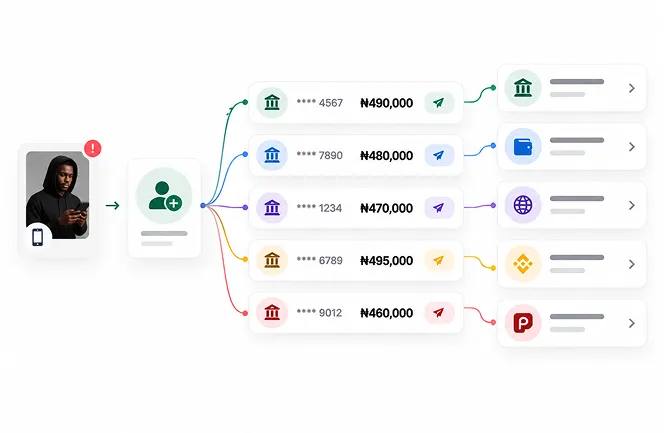
Someone gets into an account, adds a beneficiary, splits the balance into amounts just under your reporting threshold, and moves it across several rails, all within an hour. Each step passes your rules. Fourteen transactions across five accounts wouldn't.
Rules-only systems also flag too much. Analysts spend the morning clearing false positives while a structuring case sits in the same queue as a customer with a new phone.
The CBN has fined institutions over weak KYC, and NIBSS can now debit whoever receives fraud proceeds. Examiners want timestamps, decision logs, and the reason each alert was closed. If you can't produce them, they write it up as a finding.
✓HOW FRAUDSPECT WORKS
Follow one customer from onboarding to a filed report.
Step 1 of 7
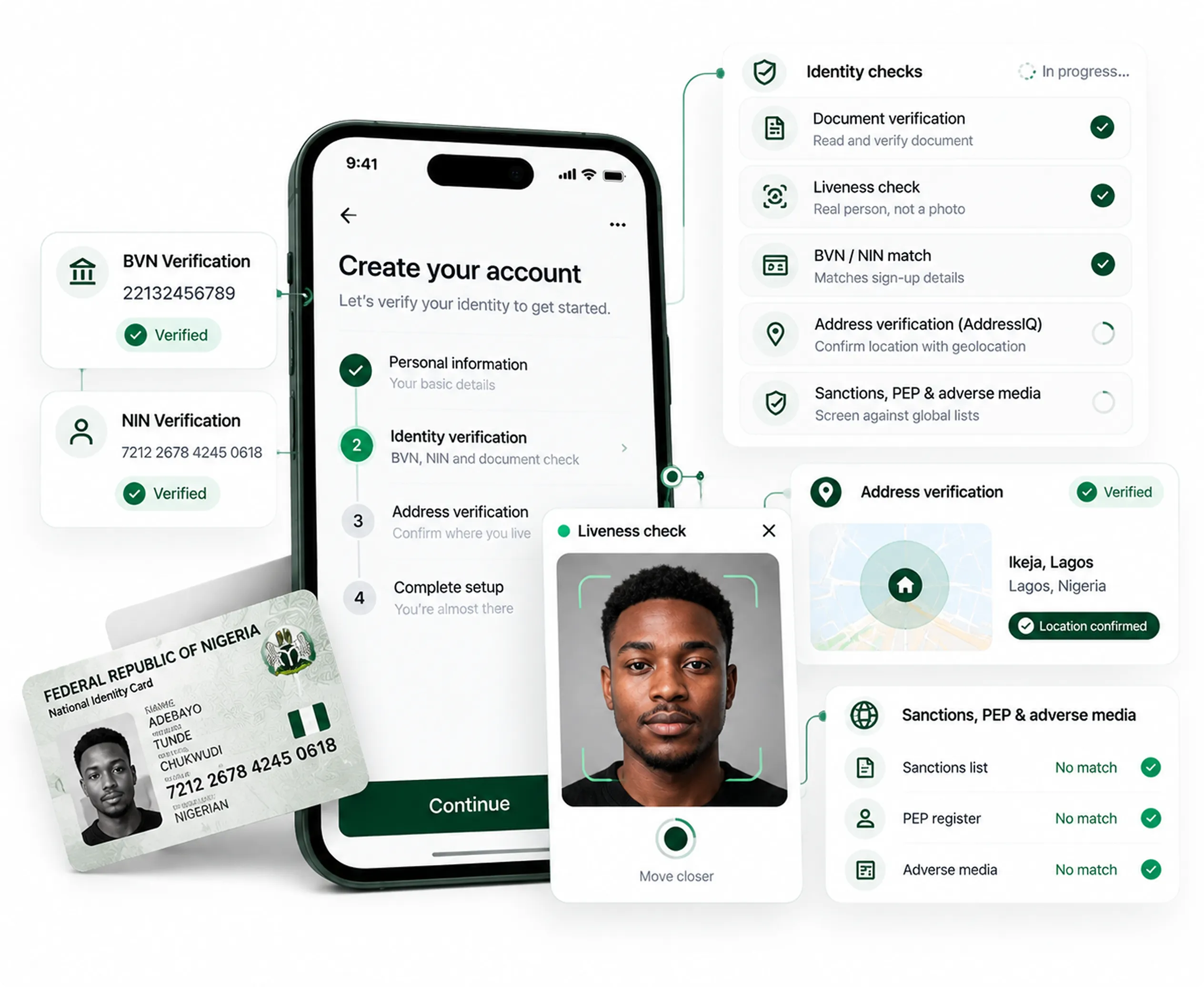
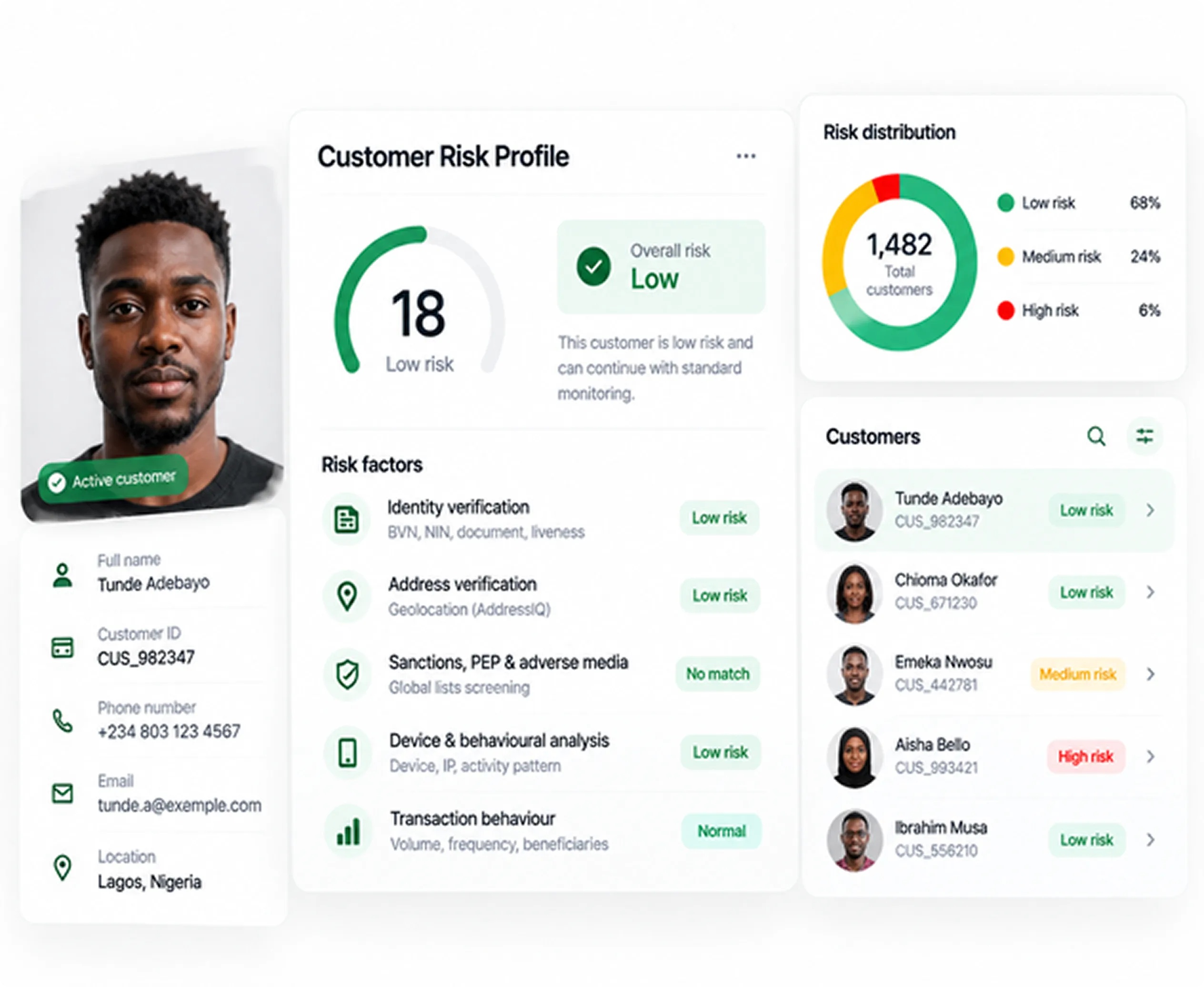
The profile starts at onboarding.
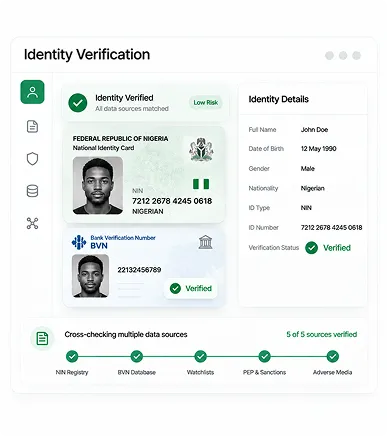
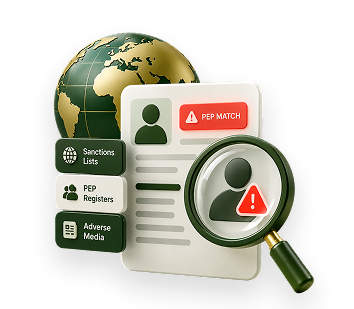
Fraudspect verifies the customer’s BVN and NIN at the source, then matches them against the name they used to sign up. If the BVN belongs to someone else, onboarding stops. AddressIQ verifies where they live using geolocation, while document and liveness checks confirm their identity. Their name is also screened against sanctions, PEPs, and adverse media. Your app keeps moving throughout, and you choose which checks run at each tier.
A model that learns your customers and learns from your analysts
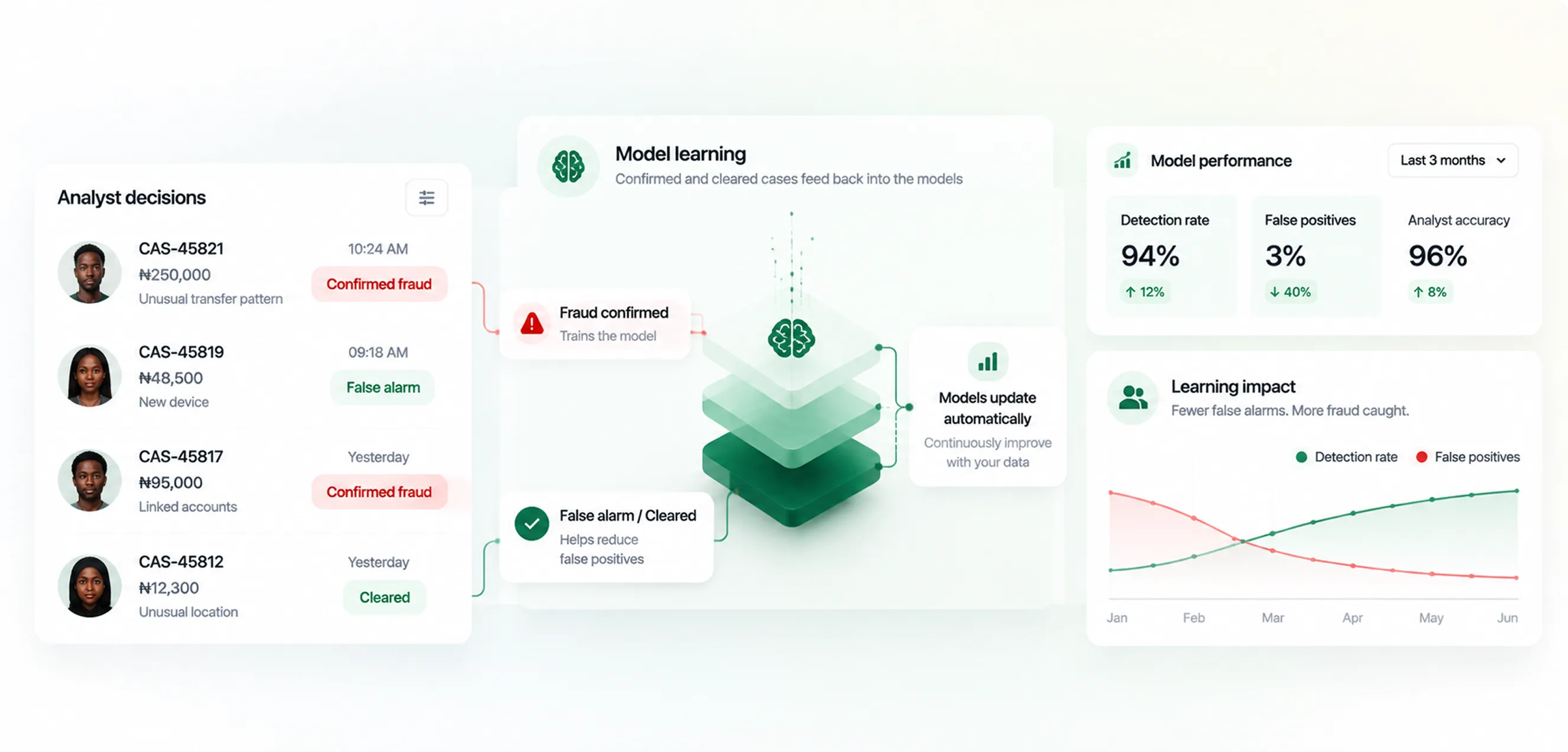
Fraudspect catches what your rules miss, and it learns from your cases.
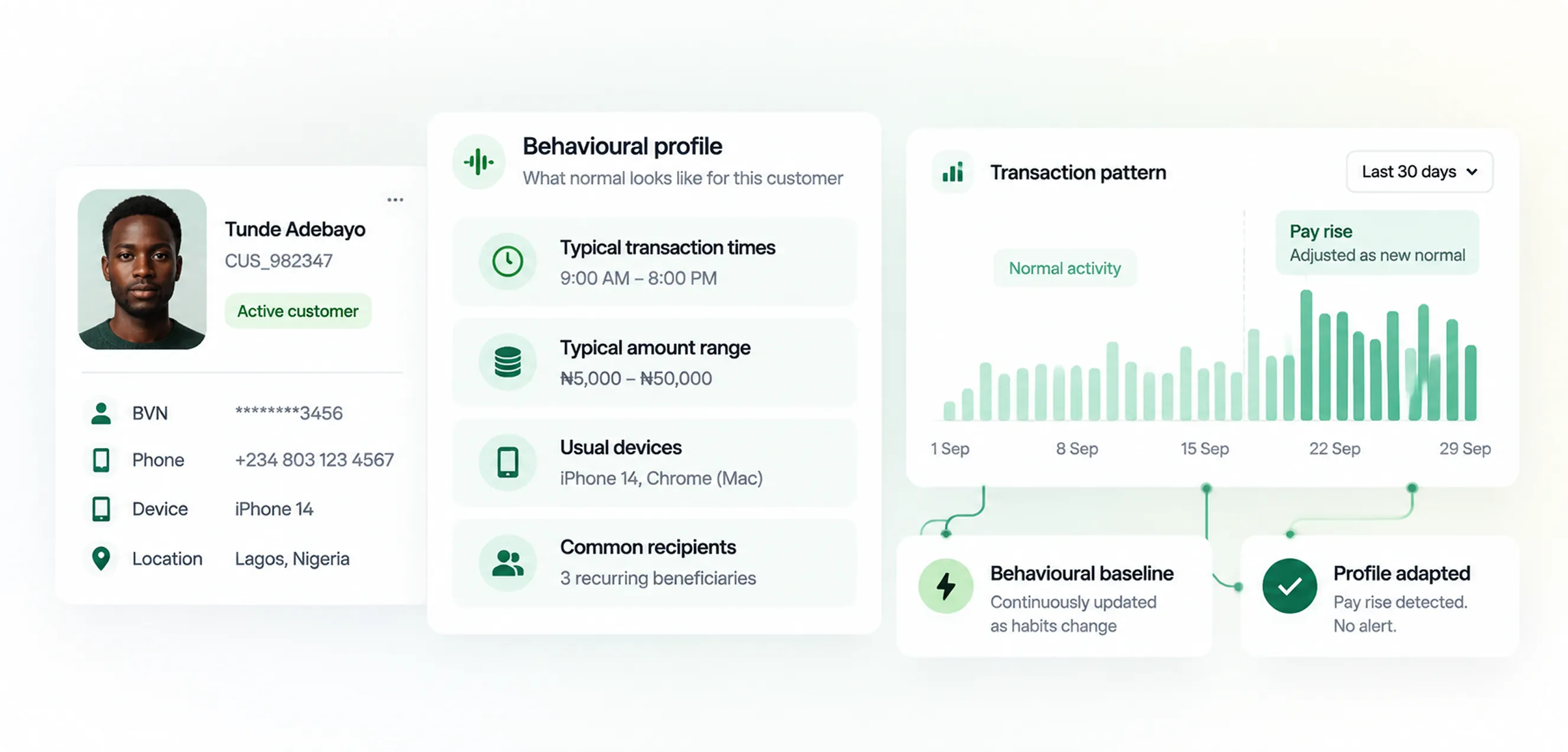
Learn what normal looks like
Fraudspect builds a behavioural baseline for every customer: when they usually transact, how much, from which devices, and to whom. The baseline shifts as their habits do, so a pay rise or a new phone doesn't get mistaken for fraud.
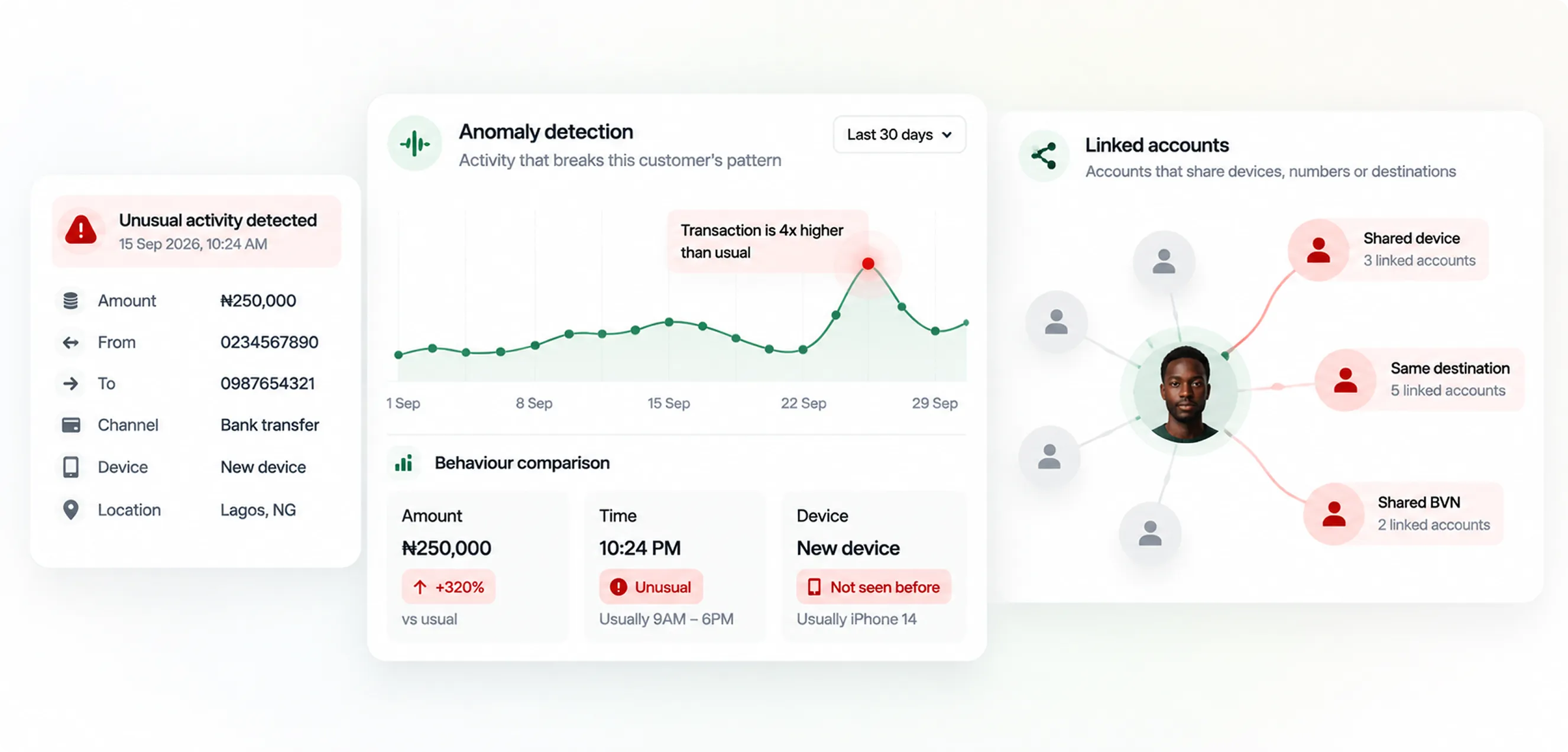
Spot what doesn't fit
Anomaly detection picks up activity that breaks a customer's usual pattern. Network analysis links accounts that share a device, BVN, phone number, or destination. Between them, they catch schemes nobody wrote a rule for.
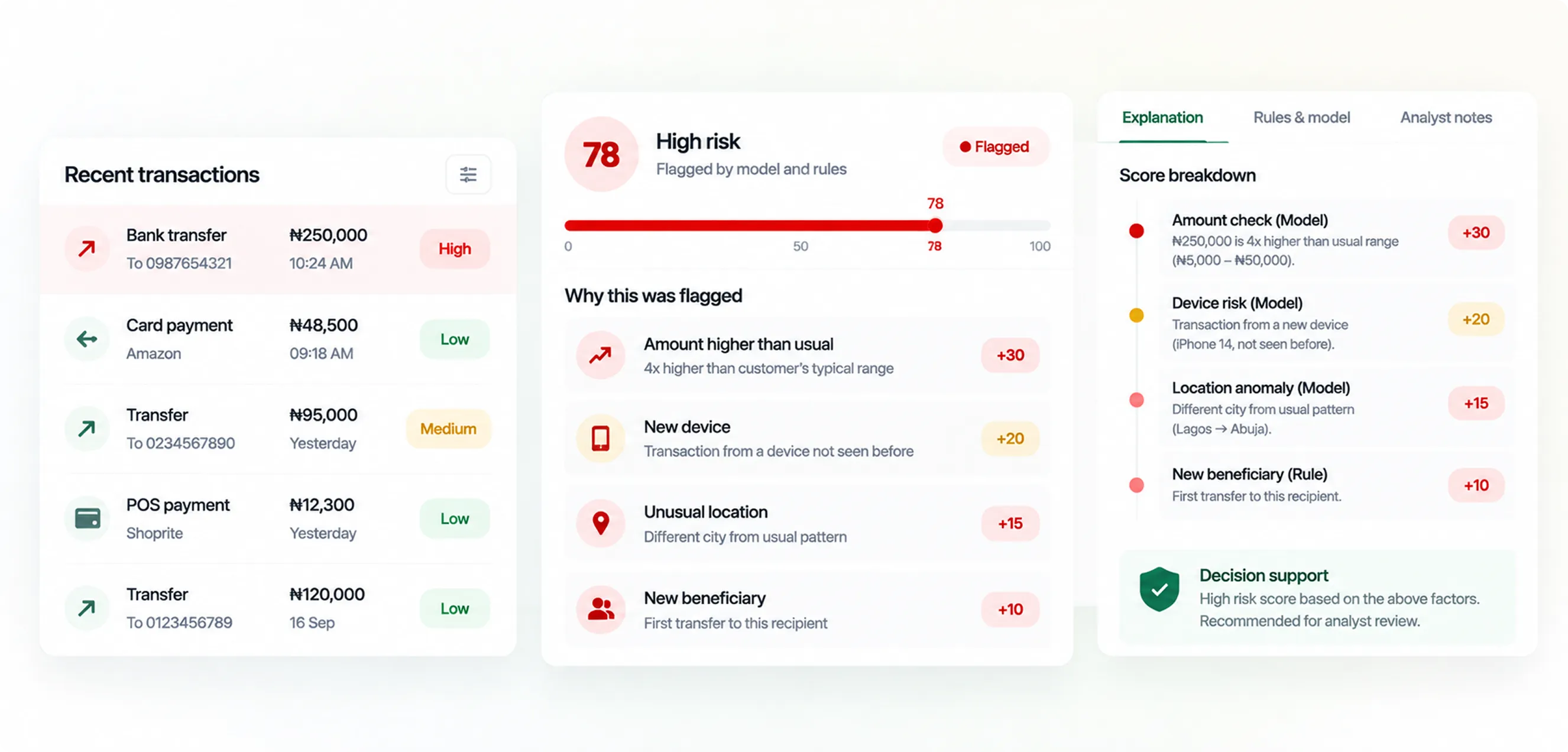
Explain every decision
Rules and models score each event side by side, and every score shows its reasons. Your analysts can see why something was flagged, and your compliance team can walk an examiner through the same decision.
Learn from your team
Every case your analysts confirm or clear goes back into the models. Over time, fewer good customers get flagged, and less fraud gets through. We track how the models perform, so accuracy doesn't slip without anyone noticing.
✓FRAUDSPECT CORE SOLUTIONS
Built for regulated businesses that cannot afford to miss
One missed check can cost you money and draw a regulatory finding. Fraudspect runs all of them on one engine
01
Transaction Monitoring
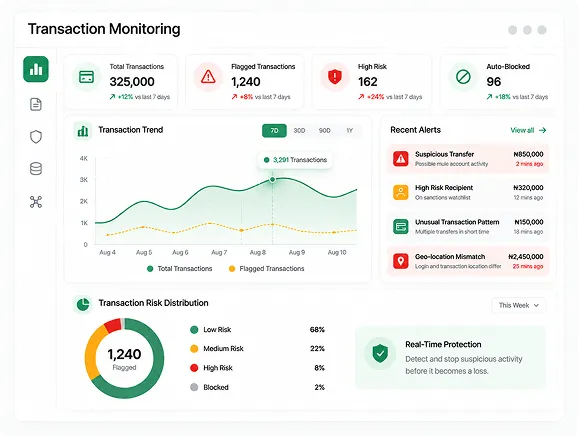
Score every payment as it happens and catch structuring, mule accounts, and velocity abuse before settlement. Rules and machine learning run side by side, so your analysts see why an alert fired.
Every number below comes from our clients' own fraud and AML reporting, and each one carries their sign-off.
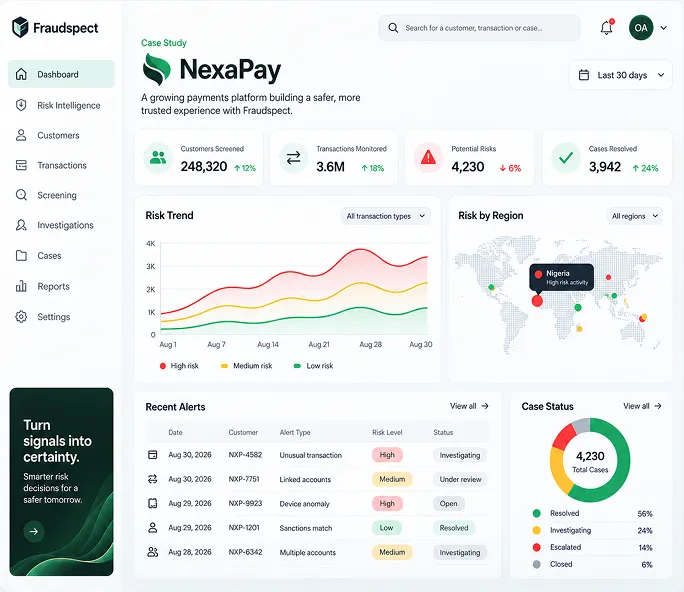
From scattered signals to a clearer picture of risk.
NexaPay connected identity, screening and transaction intelligence with Fraudspect, giving its risk team a clearer view of suspicious activity and the context behind every alert.
✓CLIENT REVIEWS
See why clients trust Fraudspect
Risk and compliance leaders at banks and other regulated businesses share what changed after they switched to Fraudspect
Credit Direct has experienced stronger fraud prevention and improved monitoring across our systems. It’s a reliable layer of security we trust.”
Patrick Wayne
Founder
Sana Sana
CEO
Komfo Health
“We chose Fraudspect for our
verification needs, and the transition was seamless. The platform’s ability to maintain high data integrity while ensuring a smooth integration process has been so cool.”
✓INDUSTRIES
Built around your risk
The same engine, trained on the fraud your industry actually sees
Unlike a fraud tool that only flags, Fraudspect acts as a decision engine, bringing onboarding checks, screening results, and transaction behaviour into one customer profile to deliver an approve, review, or decline decision in milliseconds, with reasons attached.
Rules catch the fraud you already know about. The schemes costing you most are built to pass them: an account takeover followed by a new beneficiary, then a balance split just under your reporting threshold across several rails. Each step looks clean on its own. Fraudspect keeps your rules running and adds models that see the pattern across accounts, devices, and time.
Global platforms are strong at the fraud they were trained on. Fraudspect was trained on the fraud this market sees: SIM swap takeovers, mule layering, BVN and NIN manipulation, and agent collusion. Reporting is mapped to the CBN and NFIU, and support comes from people who know your payment rails and work your hours.
Rules flag anything that crosses a threshold, including plenty of genuine customers. Fraudspect compares every event with that customer's normal behaviour, so a regular customer with a new phone or a larger transfer doesn't automatically become an alert. Every case your analysts clear goes back into the models, so the queue gets cleaner the longer you use it.
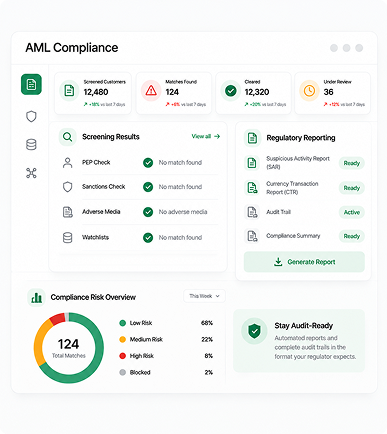
Every decision records the rules that fired, the signals behind the score, who reviewed it, and why it was closed. STRs and audit trails come out in the format your regulator expects. When an examiner asks about a case from last year, your team opens the file instead of rebuilding it.
Most teams send live traffic within a week. Your engineers connect one REST API and a set of webhooks from our documentation, starting in a sandbox that keeps production untouched. Most teams also run Fraudspect next to their existing system at first, compare what each catches, and switch once the results speak for themselves. Banks with an internal security review should allow more time for approval than for the integration itself.